
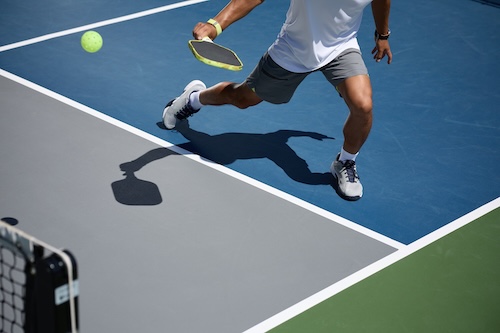
Pickleball has become one of the fastest-growing sports in the nation… and here in Marquette, Michigan, that rings true as well. Being low-impact on your body and low-cost, pickleball is an approachable sport for young kids, adults, and seniors alike. All you need to get started is a ball, racket, shoes, a partner, and a court to play on!
But, like all sports, getting injured happens from time to time. This is especially true for seniors who are picking up the game. Keep reading to learn what injuries are most common, how to prevent these injuries, and what to do should you get injured while playing.
Common pickleball injuries
Pickleball elbow, also known as lateral epicondylitis, is the most common injury you can get while playing. This is the result of the overuse of repetitive arm and wrist movements. Playing regularly and pushing yourself to continue when tired can cause strain and create inflammation in your forearm and elbow. This type of injury isn’t only present when playing pickleball; it can also affect your daily life. It can be easy to overlook, but it should be something that you take care of and get help for sooner rather than later.
Another common overuse injury is related to your rotator cuff. You’ll know you may have aggravated your rotator cuff if you have shoulder pain that won’t go away, arm weakness, or even difficulty reaching overhead. This type of injury can happen by doing hard swings. It’s also most common in players who play pickleball frequently and at a high intensity.
Other injuries happen simply by the moving mechanics of the game. When you’re making quick movements, pivoting, and lunging, it can be easy to strain certain muscles in your legs. Additionally, pickleball puts a lot of pressure and stress on your joints and tissues. Calf strains, Achilles tendon injuries, and ankle sprains are all common because of these stress factors.

Preventing Injuries
While you can’t always avoid getting injured, there are steps you can take to make it less likely to happen, or to make the injuries less severe to begin with.
The best thing that you can do in sports is listen to your body. If you start feeling tired, are starting to feel some discomfort in your arm, wrists, or legs, or feel dehydrated, it’s important to stop pushing yourself to play. While you may think that discomfort is temporary, by playing through it, you risk putting yourself in harm’s way.
Warming up and stretching for at least 10 minutes is a great way to prepare your muscles. Stretching all major body parts, and warming up through light jogging or walking is the best way to prevent injury.
Be sure to invest in some well-fitted athletic shoes that are meant to help with side-to-side movements. You’ll know you have a good pair when you get great ankle support.
Lastly, drinking enough water is incredibly important to ensure you don’t get dehydrated. Becoming dehydrated is an easy way to increase muscle fatigue and even cramping.
Get Injured? Active Physical Therapy in Marquette is here to help!
Our sports medicine specialists in Marquette and Ishpeming use evidence-based techniques and clinical research to structure rehabilitation programs for each individual athlete’s sport. Learn more about what our sports medicine specialists can do for you by making an appointment.
FAQ
I just got injured while playing… how do I kickstart recovery?
The best way to kickstart recovery is by resting. Stop playing and assess your injury. If it is a severe injury, go to your doctor or urgent care for next steps. If it’s minor, but not getting better after a week or so, consider making an appointment with a doctor and/or physical therapist.
Is pickleball or tennis more likely to cause injuries?
Pickleball is more likely to cause injuries, simply because it is a popular sport among seniors.
When do I know if I should get physical therapy for my injury?
If your injury is getting in the way of your daily activities and doesn’t seem to be getting better after a week or so.
I’ve injured my arm in the past; does this mean I need to stop playing pickleball altogether?
It depends on how severely you’ve been injured and if you’re currently healed or in the process of healing. If you’re fully healed, start slow and pay attention to any pain or discomfort. If any pain starts, stop playing and rest.